Understanding Slants in Handwriting (Graphology Explained)
Handwriting is more than just words on paper it quietly reflects our emotional responses, personality traits, and behavioral tendencies. One of the most important elements studied in graphology is Slant.
What Are Slants?
Slants refer to the direction in which handwriting leans towards the right, left, straight, or in mixed directions.
Note:
For accurate slant analysis, always take a handwriting sample on plain white paper, written naturally without forcing or changing style.
Different Types of Slants in Handwriting
1. Right Slant

When handwriting tilts towards the right, it reflects a person who is emotionally expressive and outward focused.
Personality Traits:
- Short tempered and quick to react
- Makes fast decisions in personal, professional, and social life
- Emotionally responsive
- Extroverted and expressive
Such individuals live in the present, react quickly to situations, and are comfortable expressing their emotions openly.
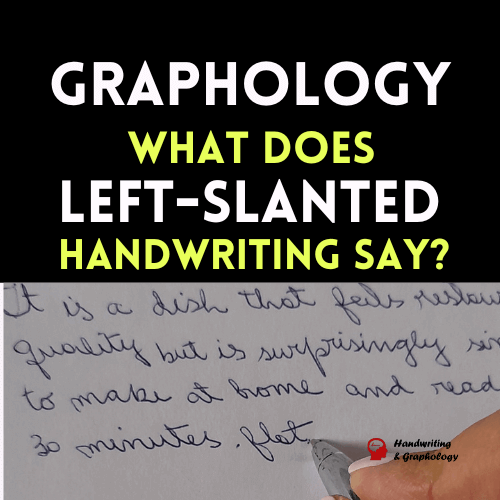
2. Left Slant

When handwriting tilts towards the left, it shows emotional withdrawal and introspection.
Personality Traits:
- Shy and reserved
- Takes time to mix with others
- Often reflects on the past
- May worry due to past experiences
- Independent and freedom loving (positive trait)
These individuals protect their emotions carefully and value personal space and independence.
3. Vertical Slant
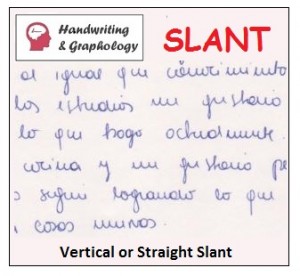
When handwriting is straight or vertical, it indicates emotional balance and self control.
Personality Traits:
- Self made and self reliant
- Independent in thinking and actions
- Emotionally balanced
- Practical and logical
Such writers maintain a healthy balance between emotion and logic, making them reliable and composed individuals.
4. Unequal Slant
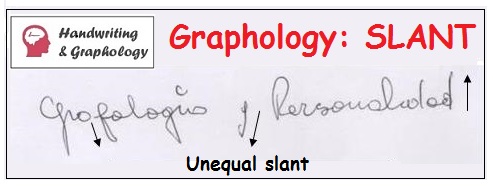
When handwriting shows a mix of right and left slants, it reflects emotional inconsistency.
Personality Traits:
- Moody by nature
- Emotional responses vary with situations
- Displays traits of both right slant and left slant personalities
- Can be expressive at times and withdrawn at others
These individuals experience emotional ups and downs and may react differently depending on circumstances.
Why Slant Analysis Matters
Slant analysis helps us understand:
- Emotional expression
- Social behavior
- Decision making style
- Inner emotional balance
It is especially useful in personality assessment, self understanding, counseling, and behavioral studies.
Final Thoughts
Handwriting slants offer a fascinating glimpse into how a person connects emotionally with the world. While no single trait should be judged in isolation, slants when studied alongside other handwriting features can provide powerful insights into personality and behavior.
Every slant tells a story learn to read it.


